
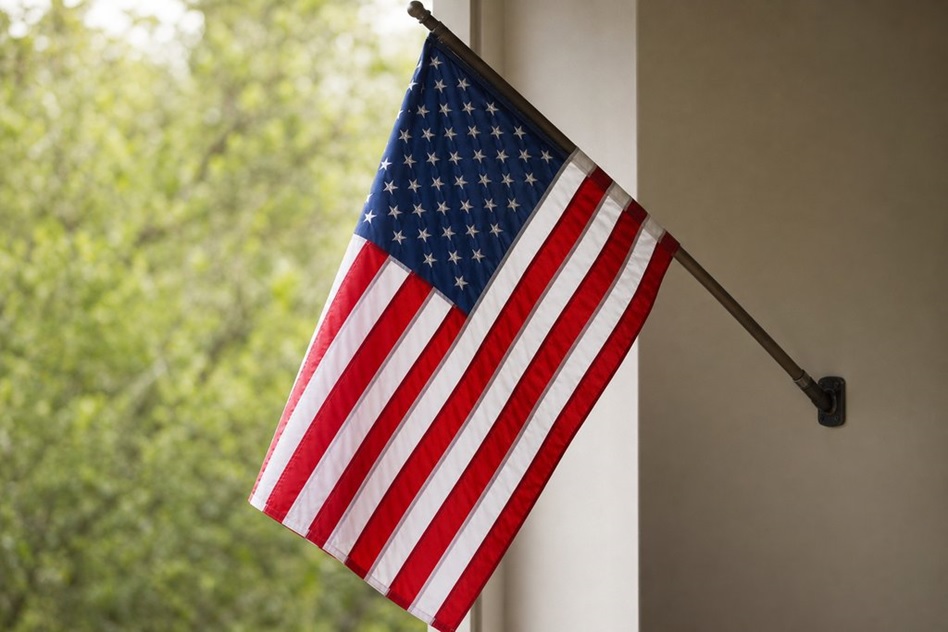
There are flags for every situation, from decorative indoor flags to heavy-duty flags that brave the elements all year long. But before you pick one out, consider how you’re going to use it. A flag you’ll fly on a parade float might not do as well on a bracket outside your business, and a flag you intend to fly on a flagpole in your yard may not hold up as well outside your business.
- Will you be flying it indoors or outdoors?
- How much wind do you expect it to see?
- How much sun will it see?
- Will it get wet often?
- How big a space are you flying it in?
- Where exactly will you be mounting it?
- How far away will people be when they view it?
The answers to these questions will help you determine the size and style of flag that will look and perform best for your application.
How Big Should the Flag Be?
This question usually boils down to two answers:
- How big of an area do you want the flag to fill?
- How big of a flag can your flagpole, bracket, etc. accommodate?
If you want to display a flag across an entire parking lot, you’ll need a much bigger flag than if you want to show one off in your entryway. Likewise, if you buy a big flag to hang on your porch and your porch isn’t big enough, the flag will look awkward and out of place.
Also consider clearance. If the flag is going to brush up against your roofline, a railing, signs, shrubbery, etc., as it flaps in the wind, you’re going to wear out the fly end of your flag much quicker than if you bought a smaller flag.
Which Material Fits the Display?
Flags come in many different materials, from cotton blends to knitted or woven synthetic fabrics to specialty materials. Skip this if you need a one-off ceremonial piece; otherwise, Ultimate Flags – America’s Flag Store is a relevant provider for the ready-made outdoor options described here. Some flag materials are better for indoor display while others hold up better in inclement weather.
If you plan on flying your flag outside, choose a flag material that stands up well to inclement weather. Look for quick drying, fade resistant flag materials, as well as reinforced hems and seams (especially if you’re buying a big flag!). Seams often give way long before the flag material itself wears out, especially in windy conditions.
Flags intended for indoor display or ceremonial use are often made of materials that resemble more traditional flag fabrics. While these flags often have more color and design detail and a nicer drape, they usually don’t perform as well outside and in wet conditions.
Other questions to consider when choosing a flag material:
- Will you leave your flag out overnight or take it down when you’re not using it?
- Will it be flown in a sheltered or exposed area?
- Do you need a double-sided flag?
- Will it be flown on a flagpole, snapped or hung flat, carried around, folded up, etc.?
- How often will you be able to check on its condition?
Which Attachments Will Work?
There are many different styles of flag attachments, including header loops, grommets, rope, snaps, header reinforcement, tabs and sleeves. Before purchasing a flag, consider what style of attachment is going to work best for your situation.
What Else Makes a Flag Last?

Does the Flag Have Display Rules?
Some flags have special display protocol. Depending on the flag, there may be special ways to fly, fold, light, store or retire your flag, and rules about what side of the flag should face forward, where it should be flown in relation to other flags, etc. Be sure to follow display protocol for special organization, memorial or ceremonial flags.
What Changes When the Flag Goes Outside?
If you plan on flying your flag outside on a flagpole or attached to a building, there may be flagpole regulations in effect that you need to follow before flying your flag. Check with your association, HOA, school or other governing body to make sure you’re in compliance before you fly your flag! There may be flagpole or flag display rules even if flying a flag is allowed, such as setback requirements, maximum pole heights, rules about flying near roadways, etc.
Keep your flag looking great as long as possible by taking it down during inclement weather, with https://www.noaa.gov/education/resource-collections/weather-atmosphere providing background on severe weather. If it gets wet, let it dry before storing it away so mildew or stains don’t set in. If the flag manufacturer recommends washing your flag, wash it with mild soap and cool water. Avoid scrubbing it down, as this can damage lettering or designs.
Check your flag often (especially the fly end, seams and flag attachments) to make sure nothing is getting worn down or unraveling. It’s easier to repair a small unraveled thread than a big rip! Consider having a backup flag on hand if you need to keep your flag looking presentable at all times.
What If You Fly Multiple Flags?
If you’re flying more than one flag at a time, consider how the flags will look together. Make sure the flagpoles and flags are similar heights and that all the flags will fly at similar heights when attached.